A Peek Into the Law
A brief snapshot of the legal system for you (yes you!), so you are aware of the world you live in and can utilize this information for your benefit!
The U.S. Government
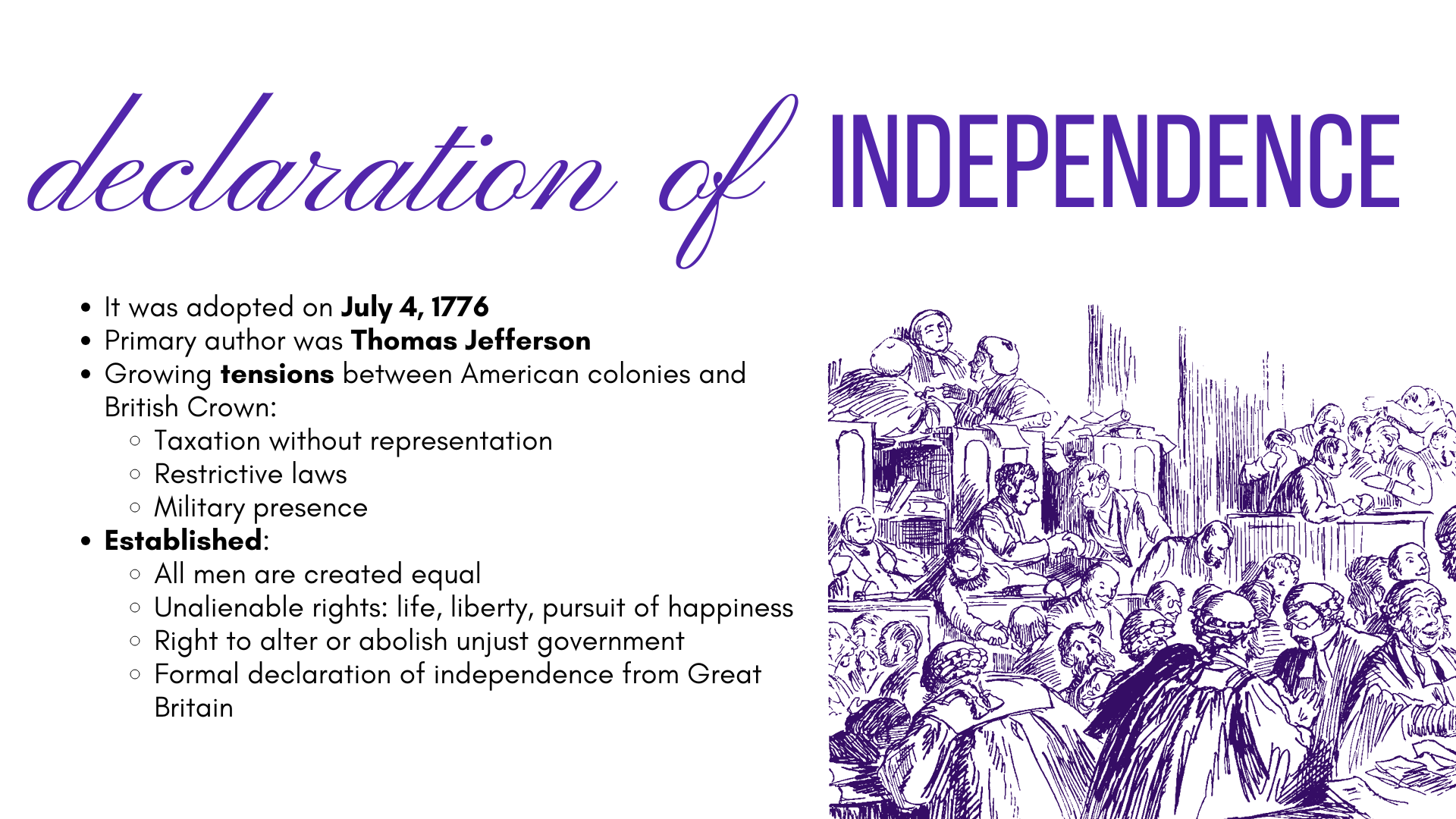
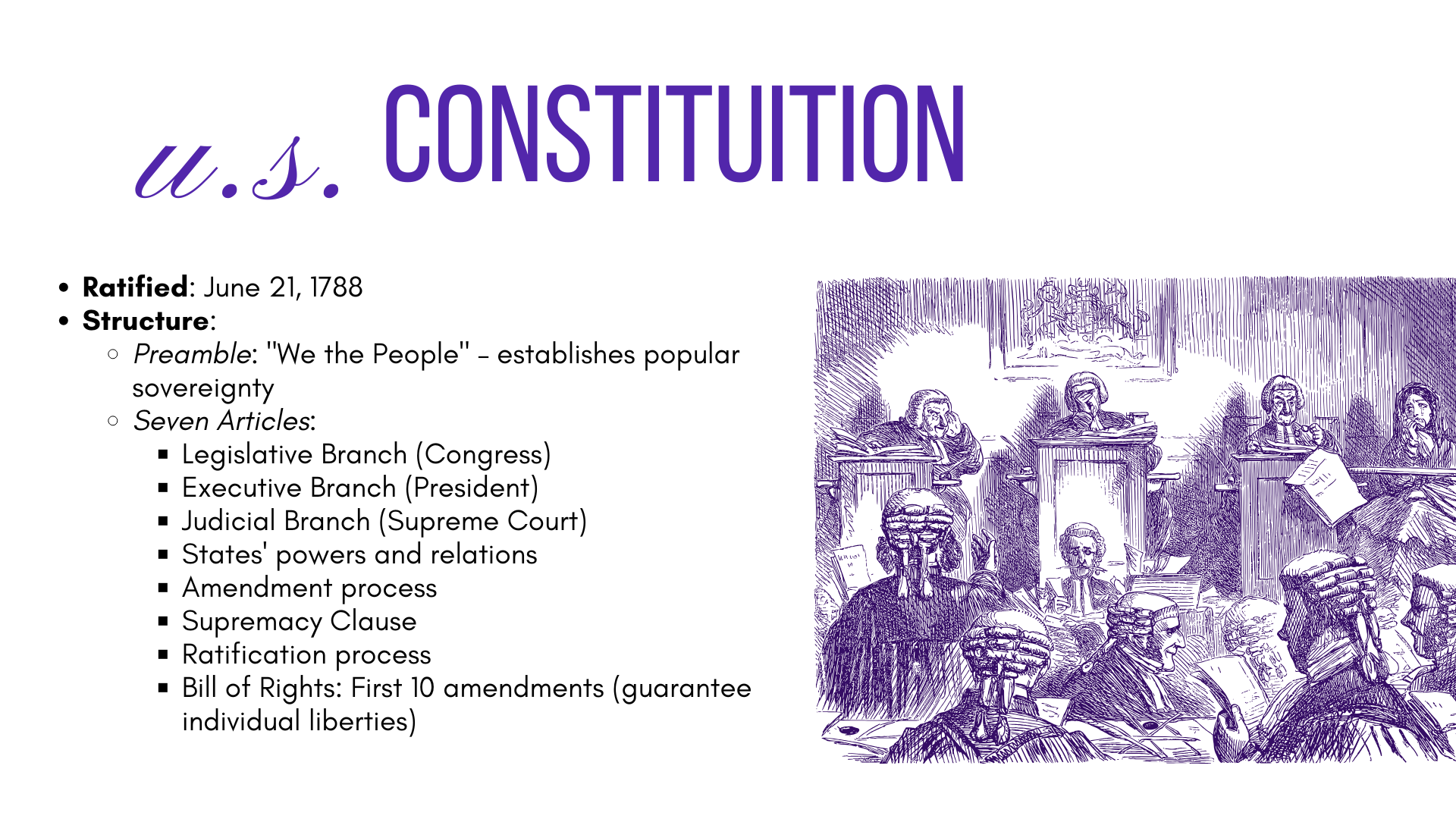
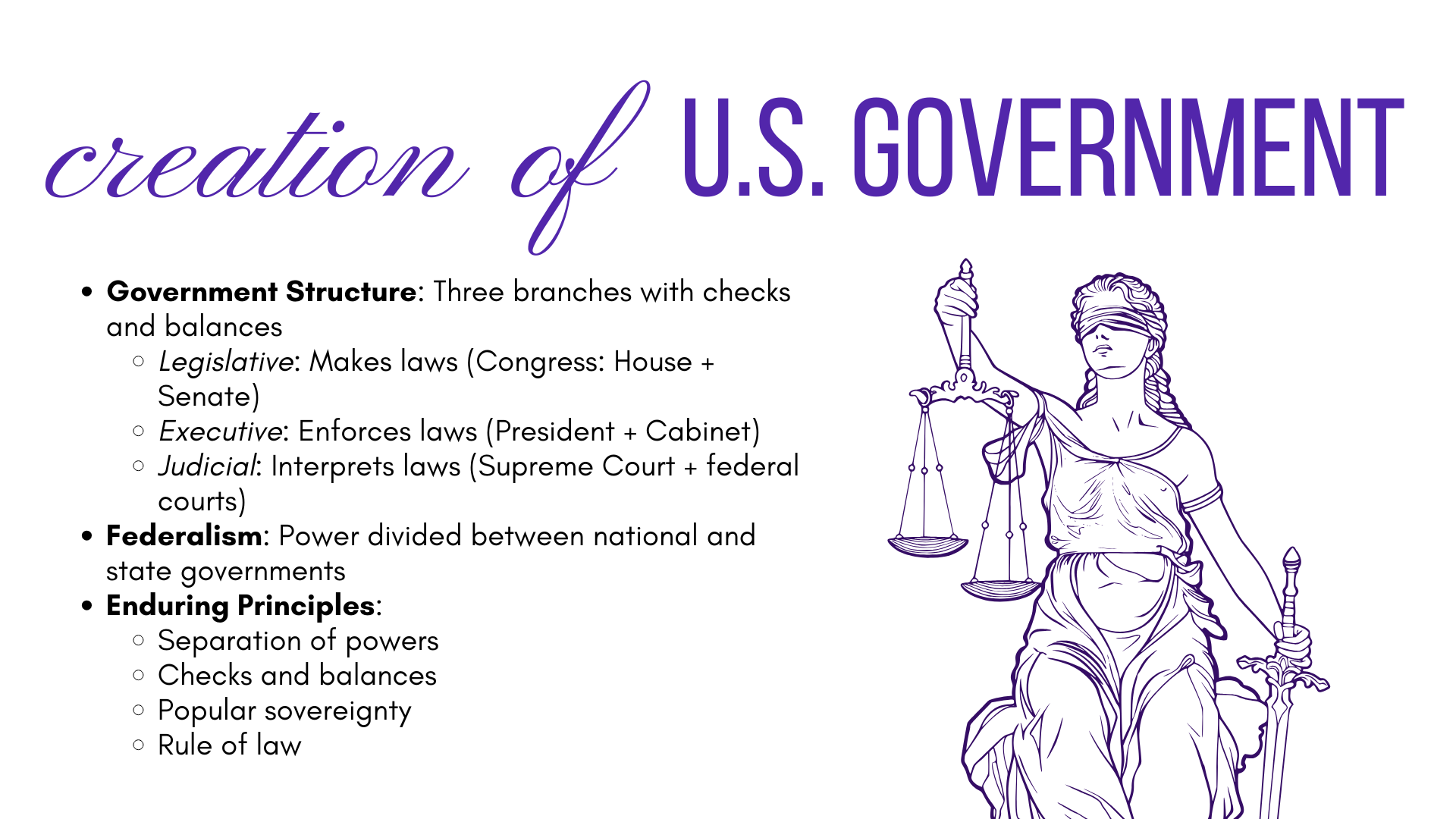
Federal Court System
Established: Article III of the U.S. Constitution (1789)
Purpose:
Interpret federal laws
Resolve disputes involving federal issues
Ensure constitutional compliance
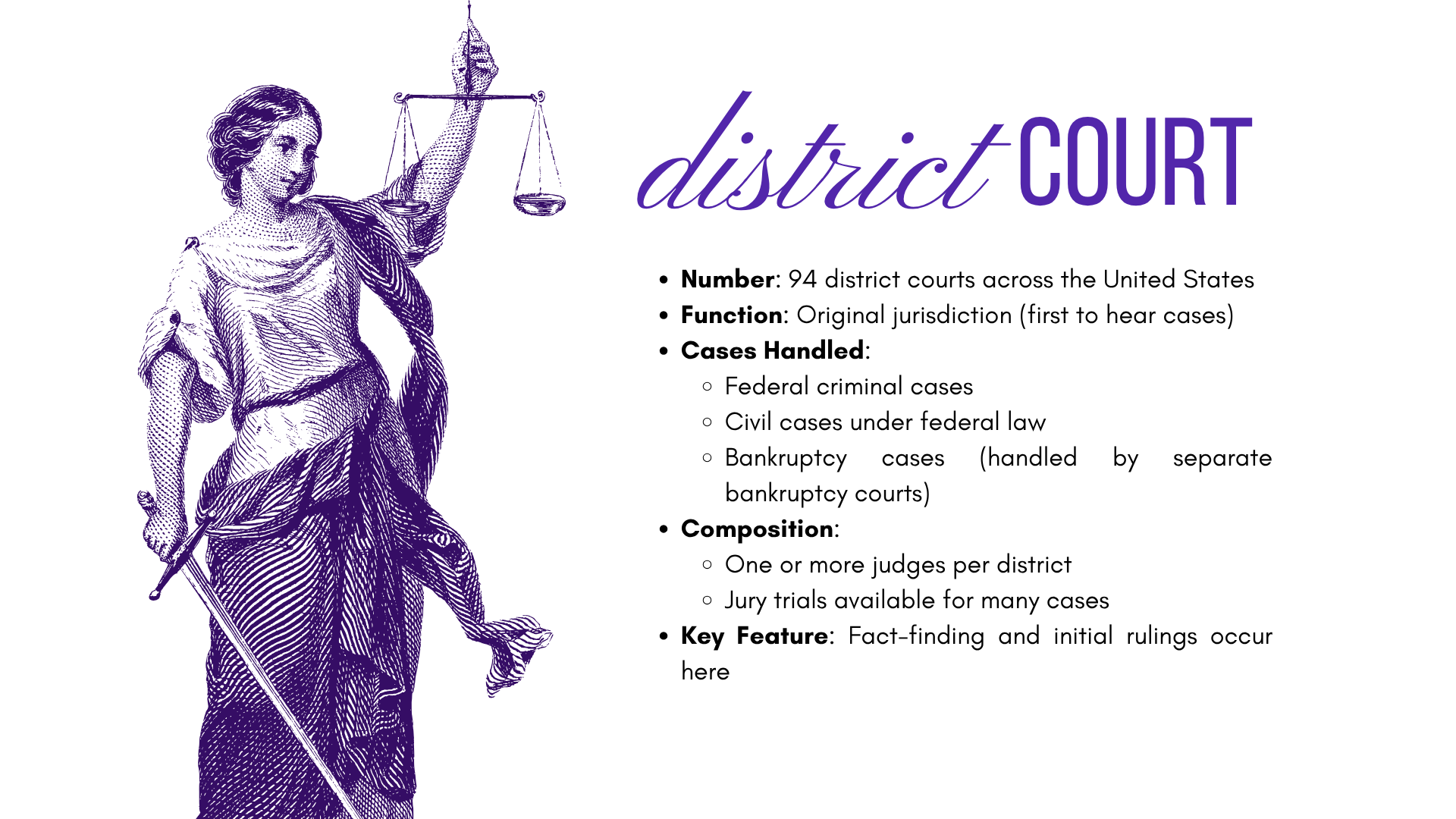
Structure: Three-tiered hierarchy
District Courts (trial level)
Circuit Courts of Appeals (intermediate appellate level)
Supreme Court (highest level)
Jurisdiction:
Federal questions,
Diversity of citizenship,
U.S. as party
Constitutional issues
Judicial Independence: Lifetime appointments (Article III judges)
Checks and Balances:
President appoints judges
Senate confirms judges
Congress sets court structure and budgets
Courts can declare laws unconstitutional (judicial review)
Stare Decisis: Precedent guides future decisions
Separation of Powers: Judiciary independent from legislative and executive branches
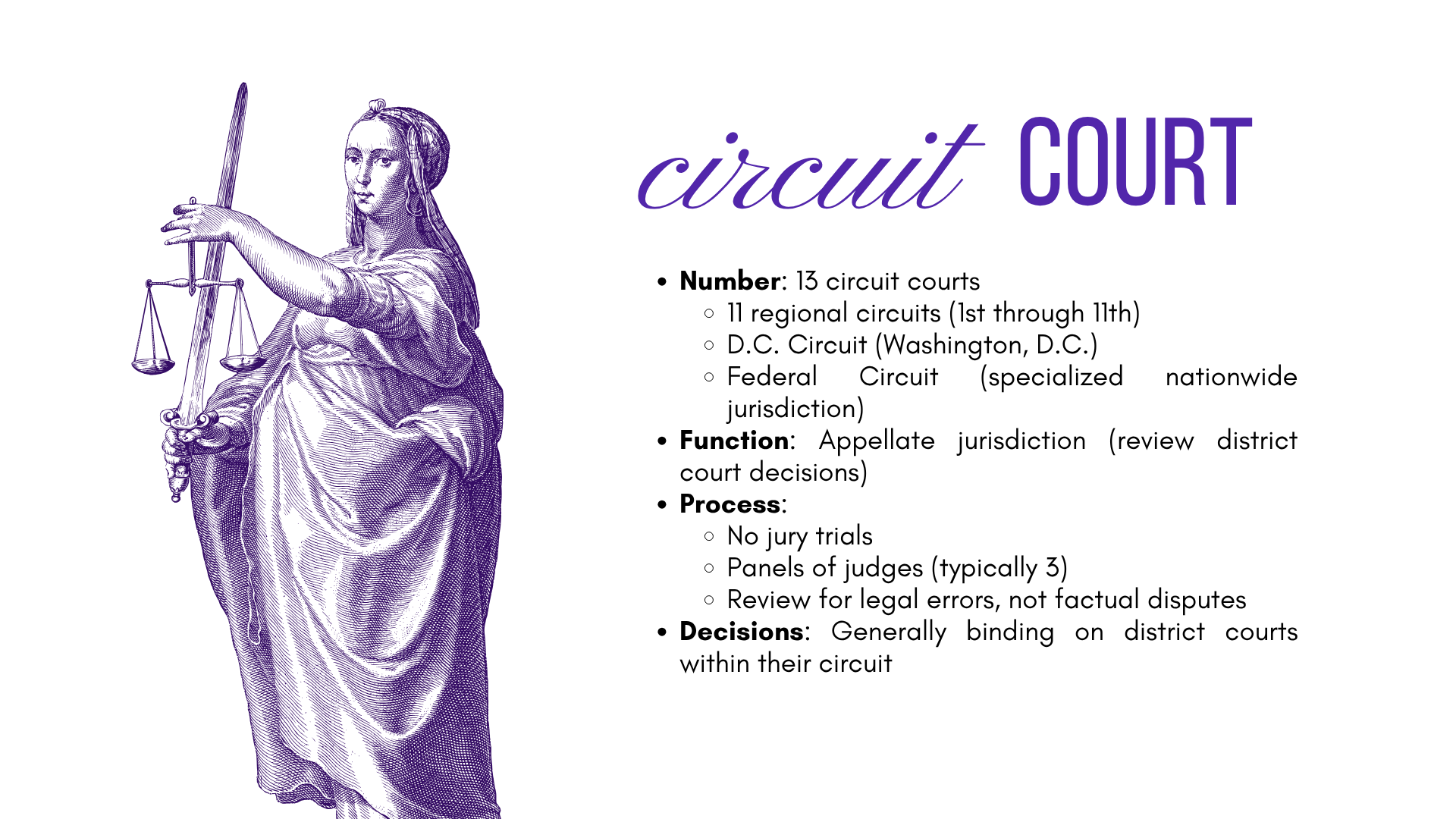
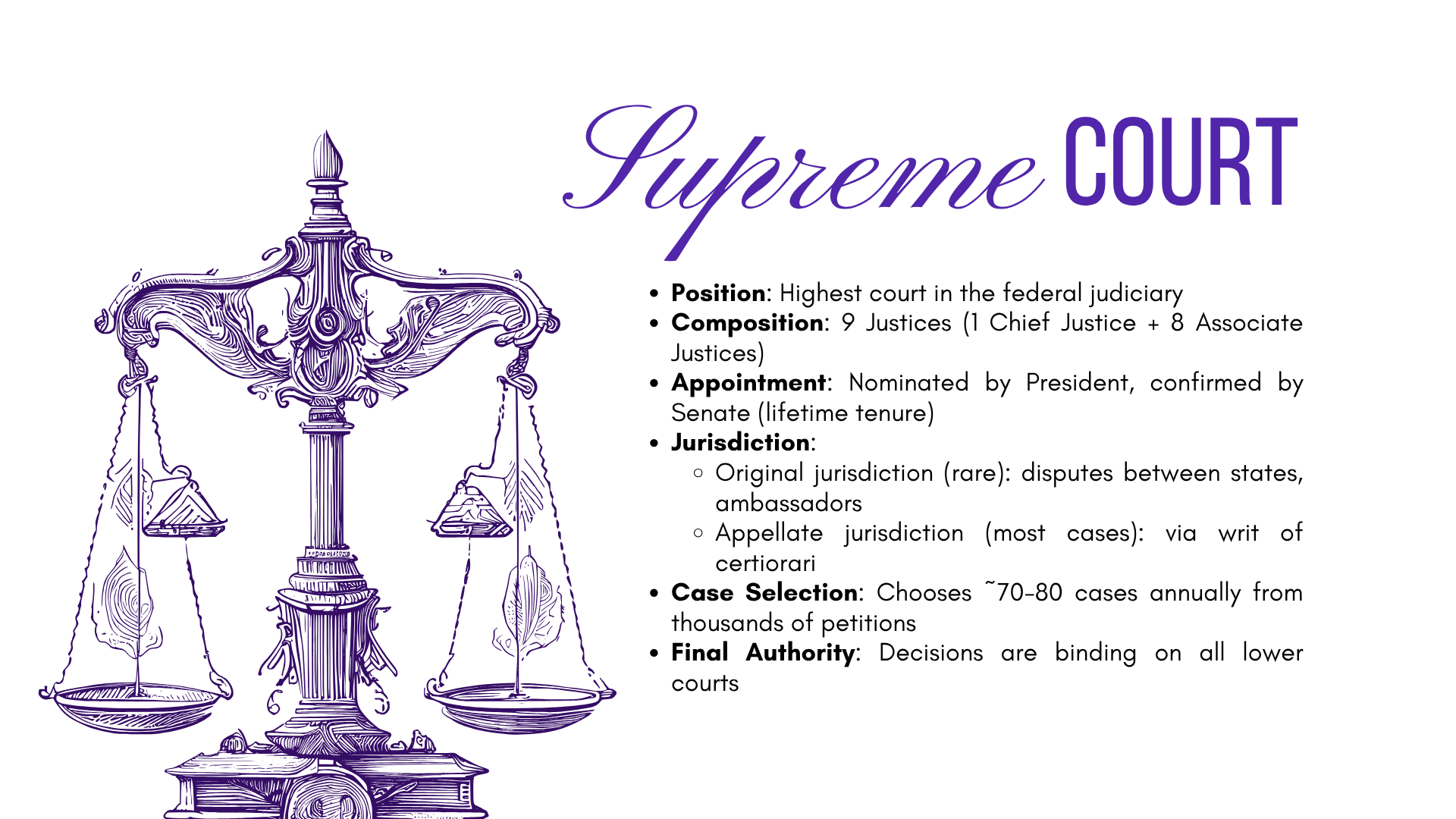
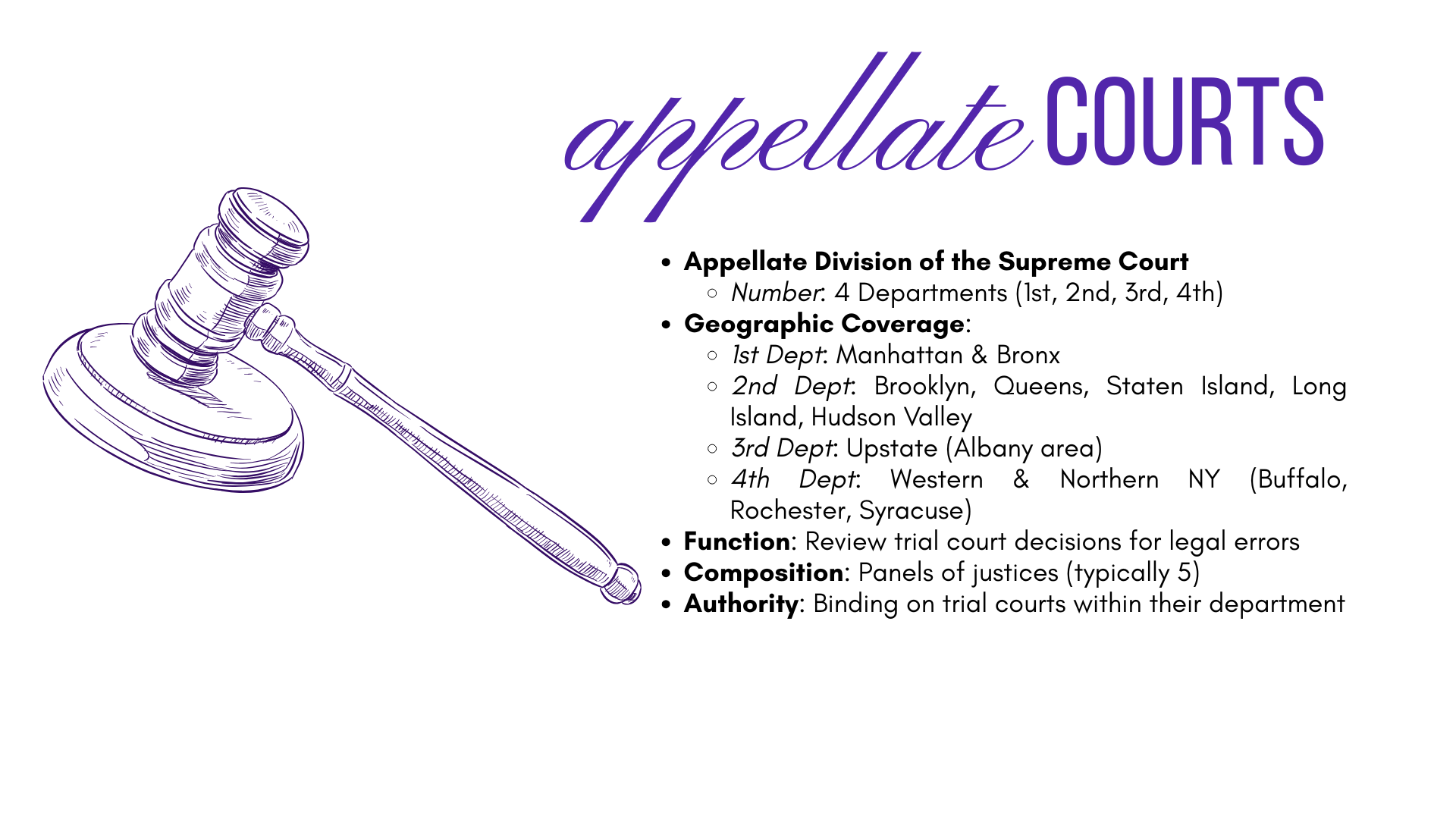
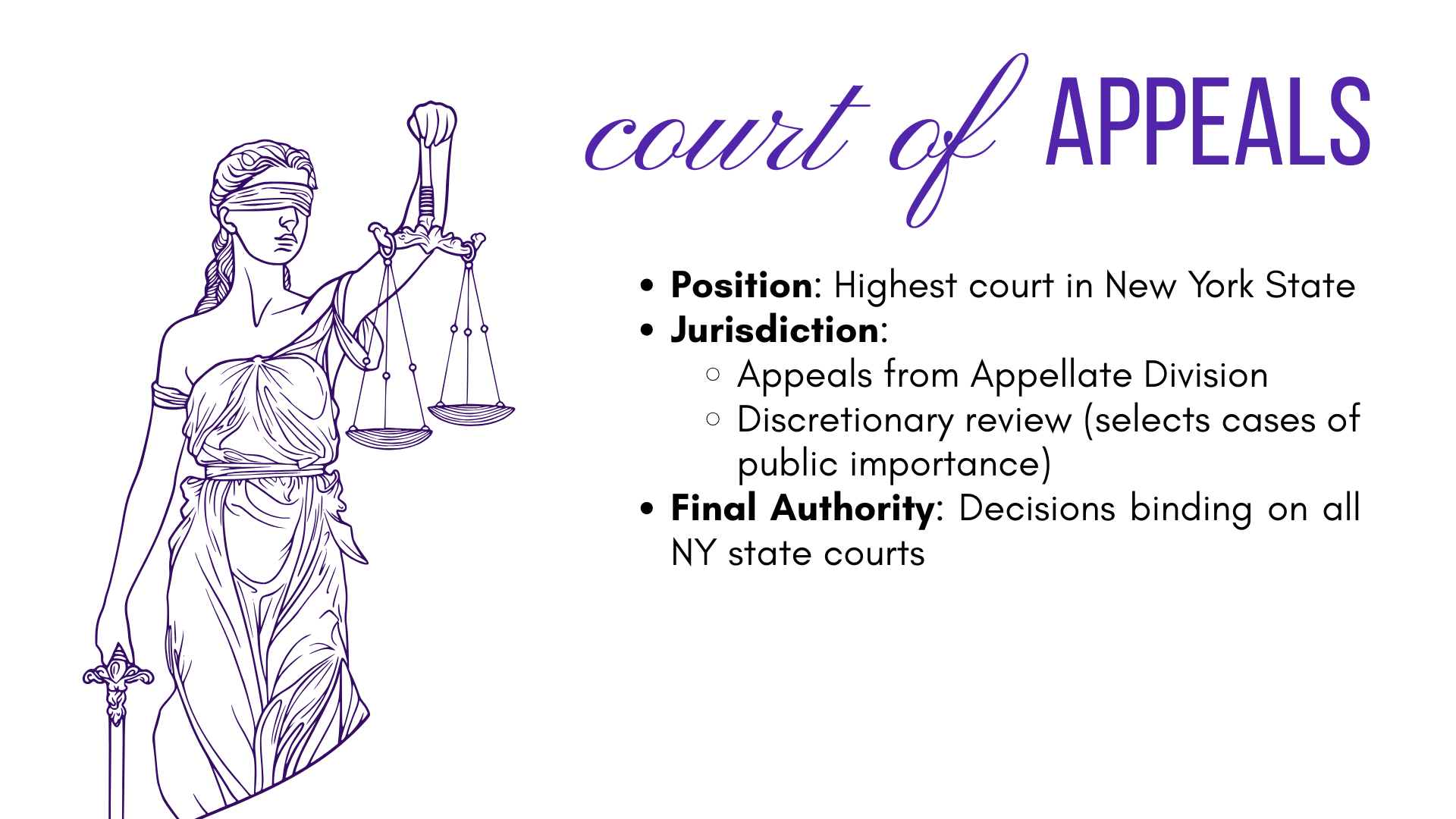
New York State Court System
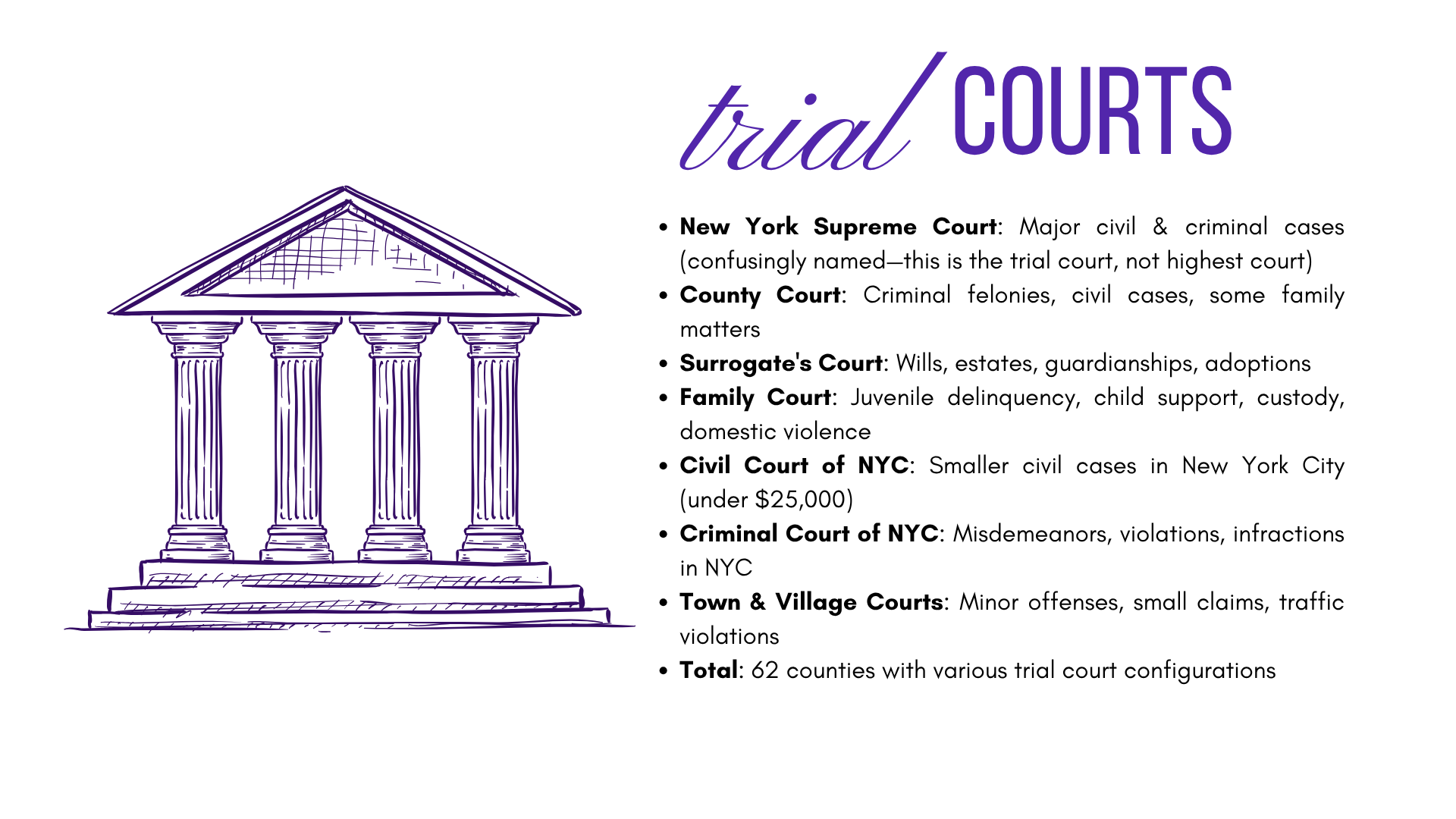
Civil Court vs. Criminal Court
~
Civil Court vs. Criminal Court ~
Aspect
Parties
Civil Court
Plaintiff vs. Defendant
Criminal Court Procedures (CPL)
Criminal Court Procedures (CPL)
Governs: Criminal prosecutions in New York State
Adopted: 1971 (replaced Code of Criminal Procedure)
Scope:
Arrest and bail procedures
Grand jury proceedings
Indictments and informations
Pre-trial motions
Trial and sentencing
Key Features:
Grand Jury: Required for felony charges (NY)
Speedy Trial: Strict time limits (e.g., 6 months for felony readiness)
Double Jeopardy: Cannot be tried twice for same offense
Sentencing: Statutory guidelines, judge discretion within ranges
Miranda Rights: Required for custodial interrogation
Civil Court Procedures (CPLR)
Civil Court Procedures (CPLR)
Governs: Civil litigation in New York State courts
Adopted: 1963 (replaced older Civil Practice Act)
Scope:
Pleadings and motions
Discovery processes
Trial procedures
Judgments and enforcement
Appeals
Key Features:
Statute of Limitations: Varies by claim type (e.g., 3 years for personal injury)
Discovery: Broad scope (depositions, interrogatories, document production)
Summary Judgment: Available when no genuine issue of material fact exists
Remedies: Monetary damages, equitable relief (injunctions)
Purpose
Punish wrongdoing, protect society
Resolve disputes, compensate harm
Burden of Proof
Preponderance of evidence
Beyond reasonable doubt
Outcome
Damages, injunctions, specific performance
Right to Counsel
Constitutional right (6th Amendment)
No constitutional right
Jury Size
Typically 6-12
Typically 12 (felony), 6 (misdemeanor)
Prison, fines, probation, parole
Verdict Requirement
Majority often sufficient
Criminal Court
People/State vs. Defendant
Unanimous (NY felony)
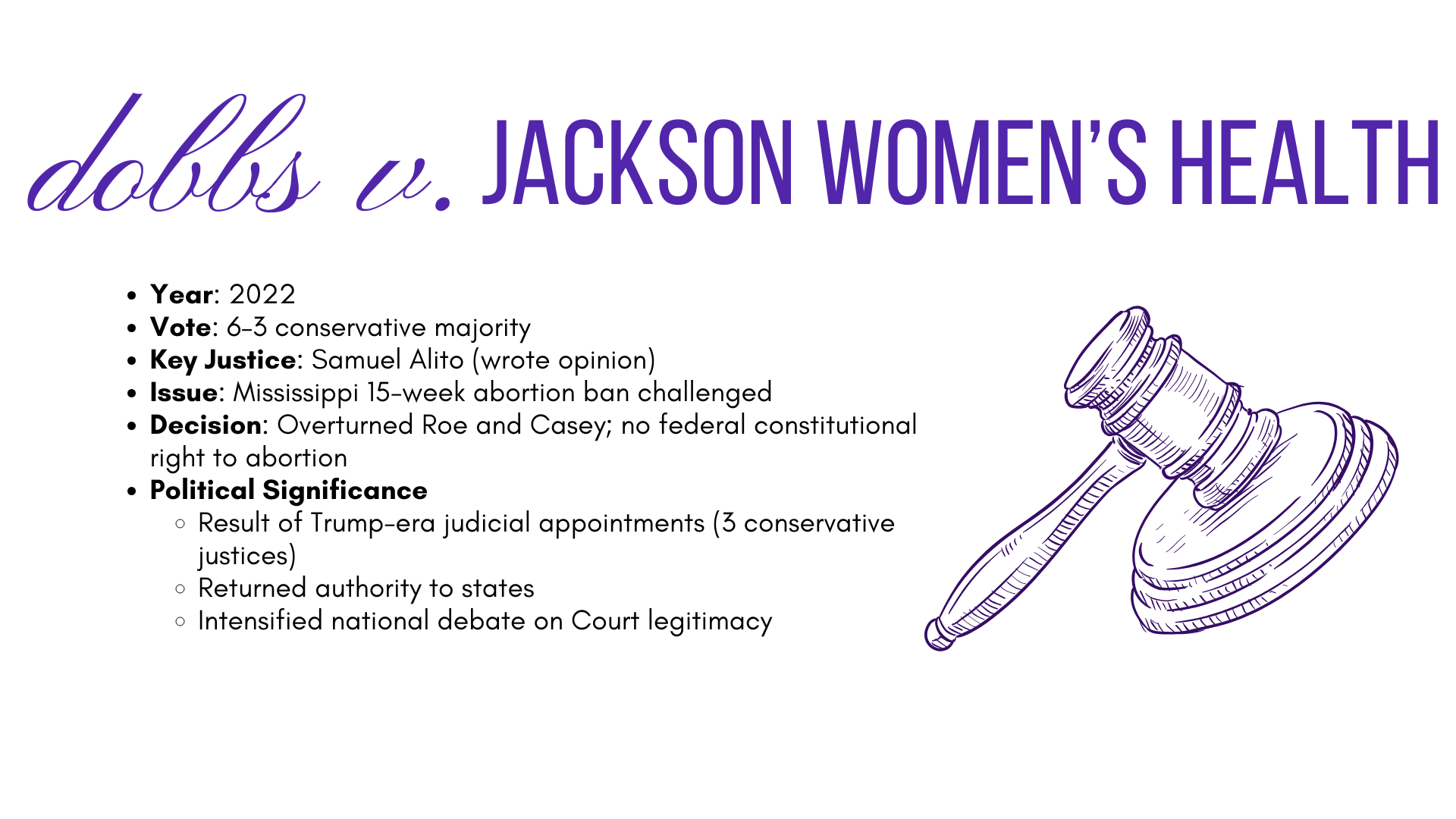
Landmark Supreme Court Cases
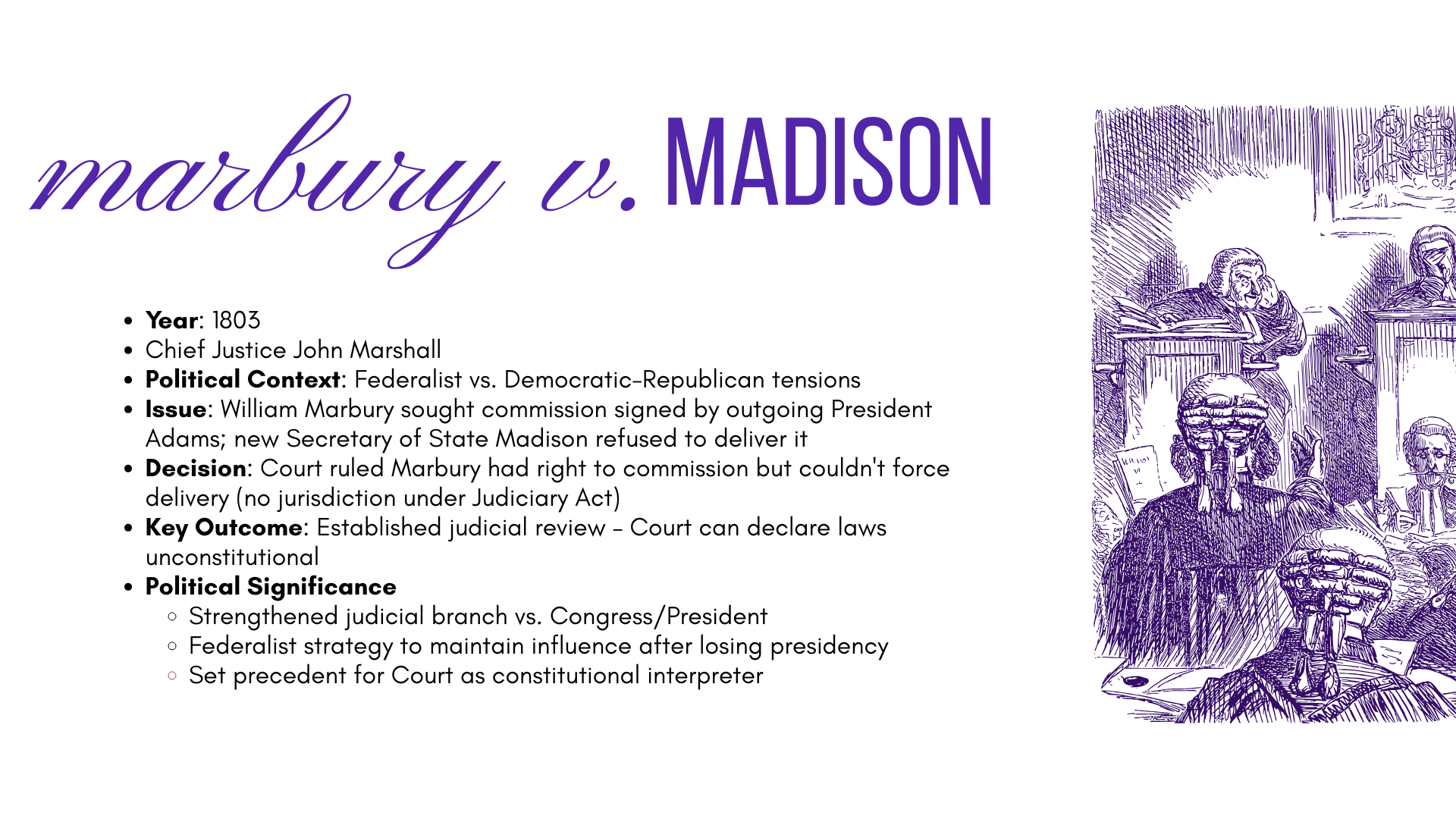
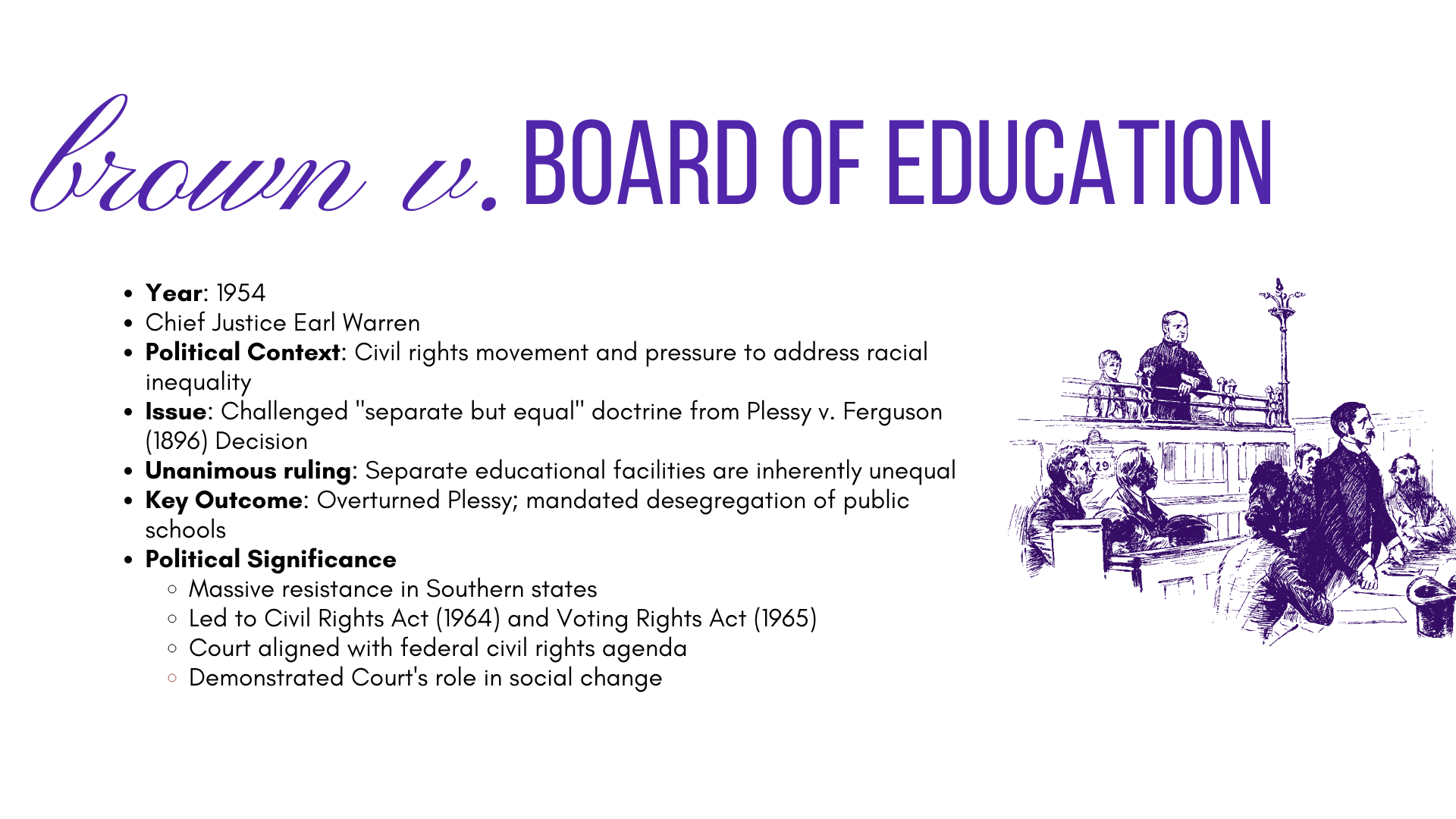
Progression of a case in the Supreme Court
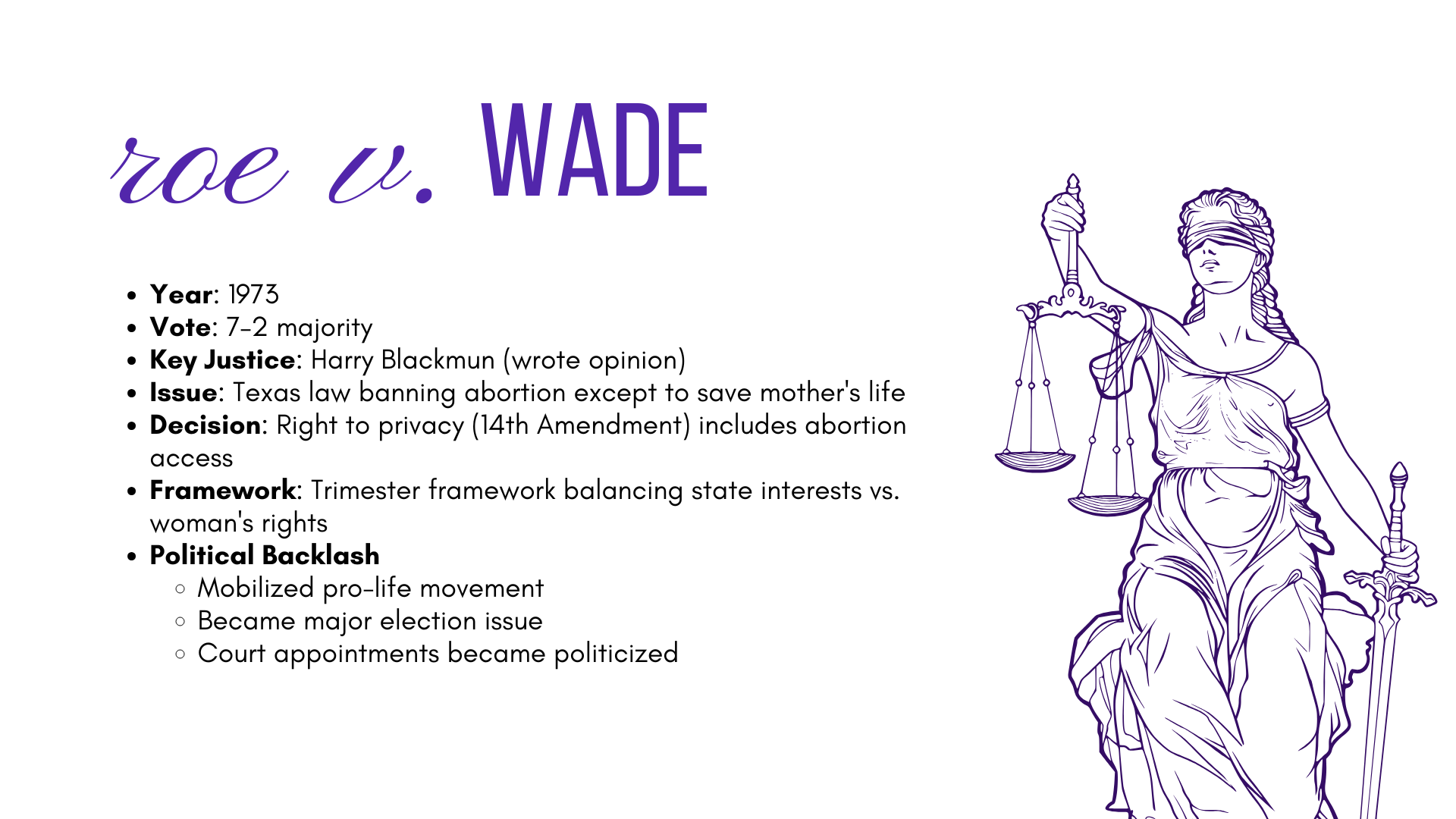
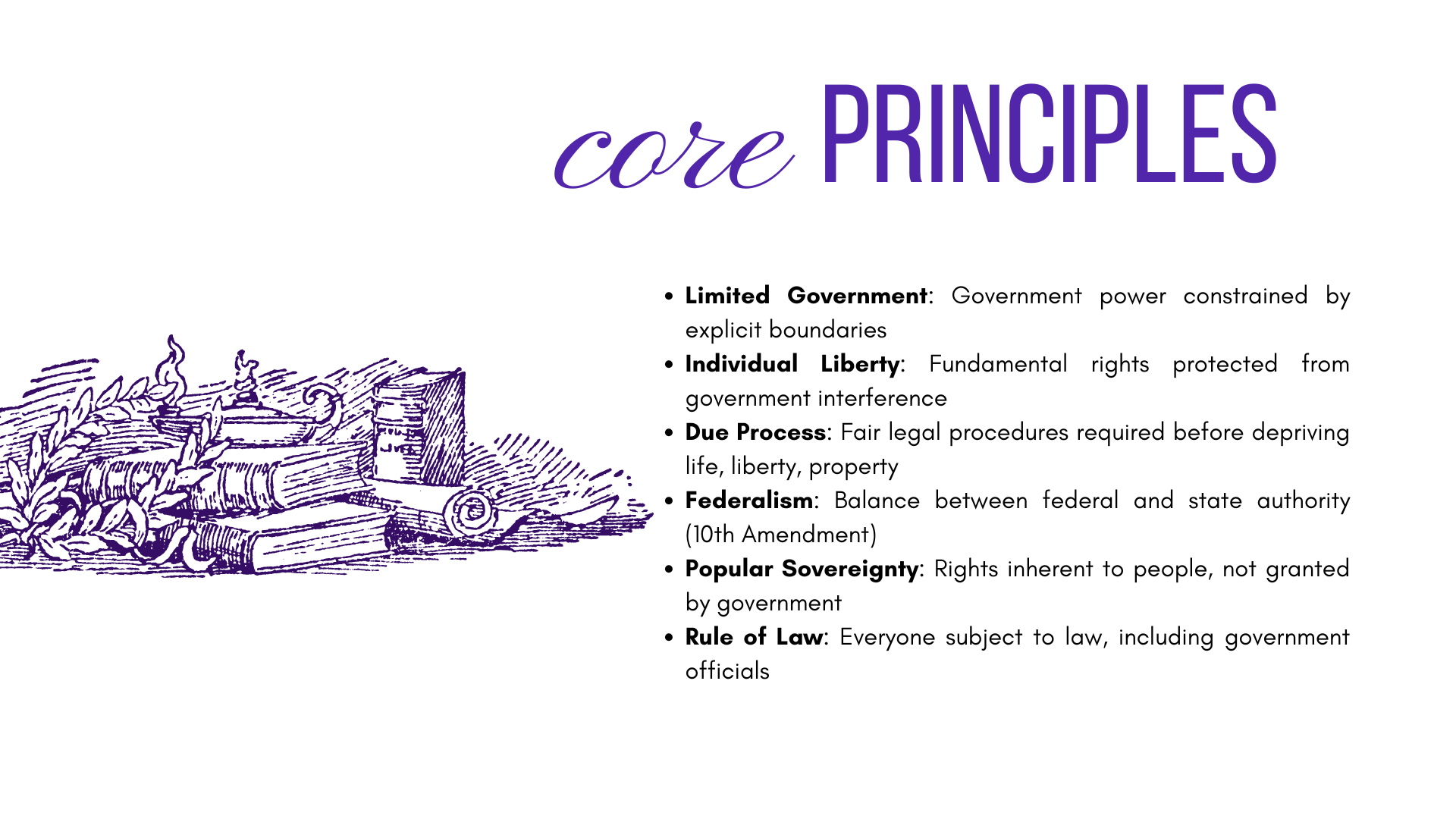
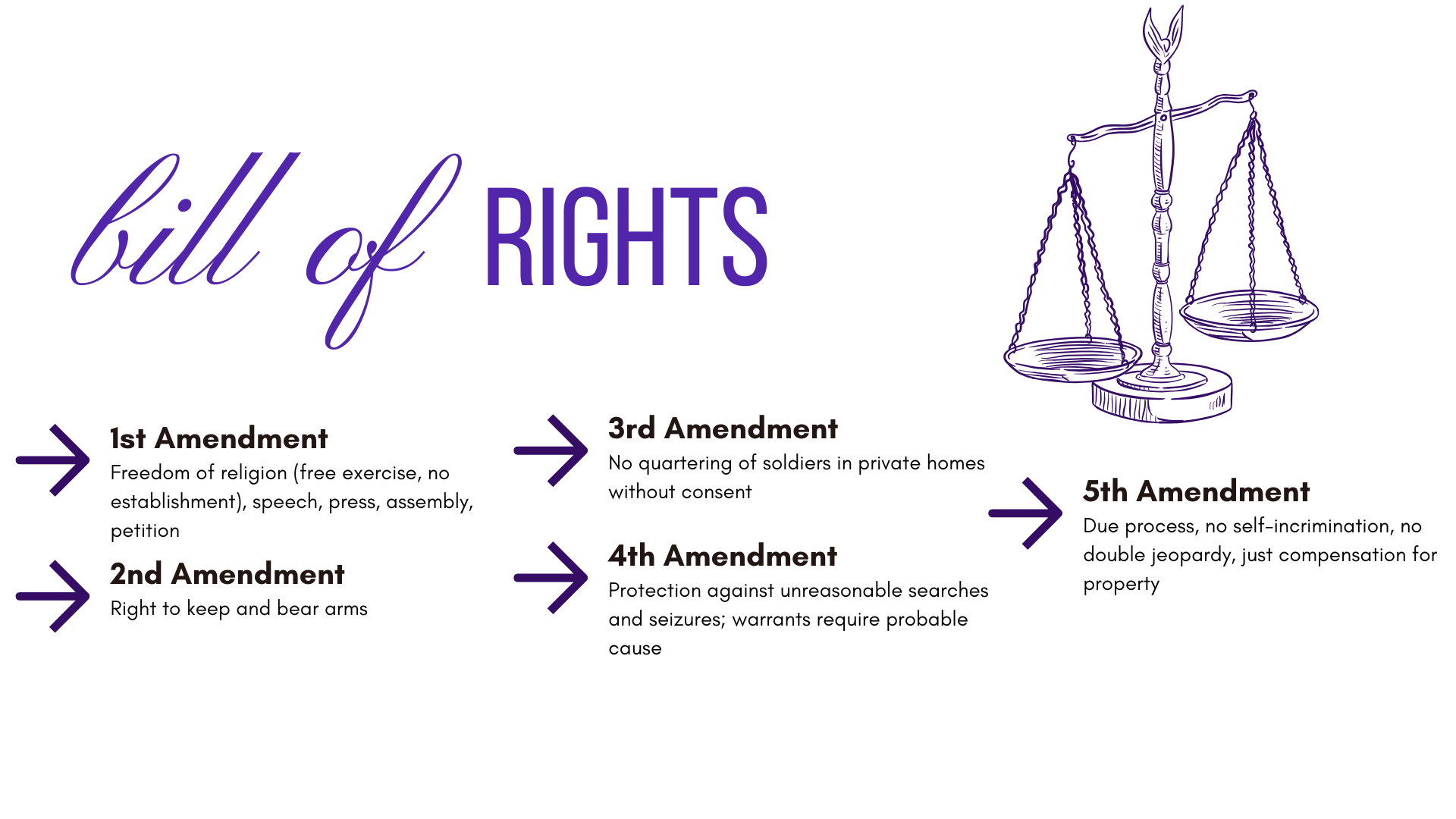
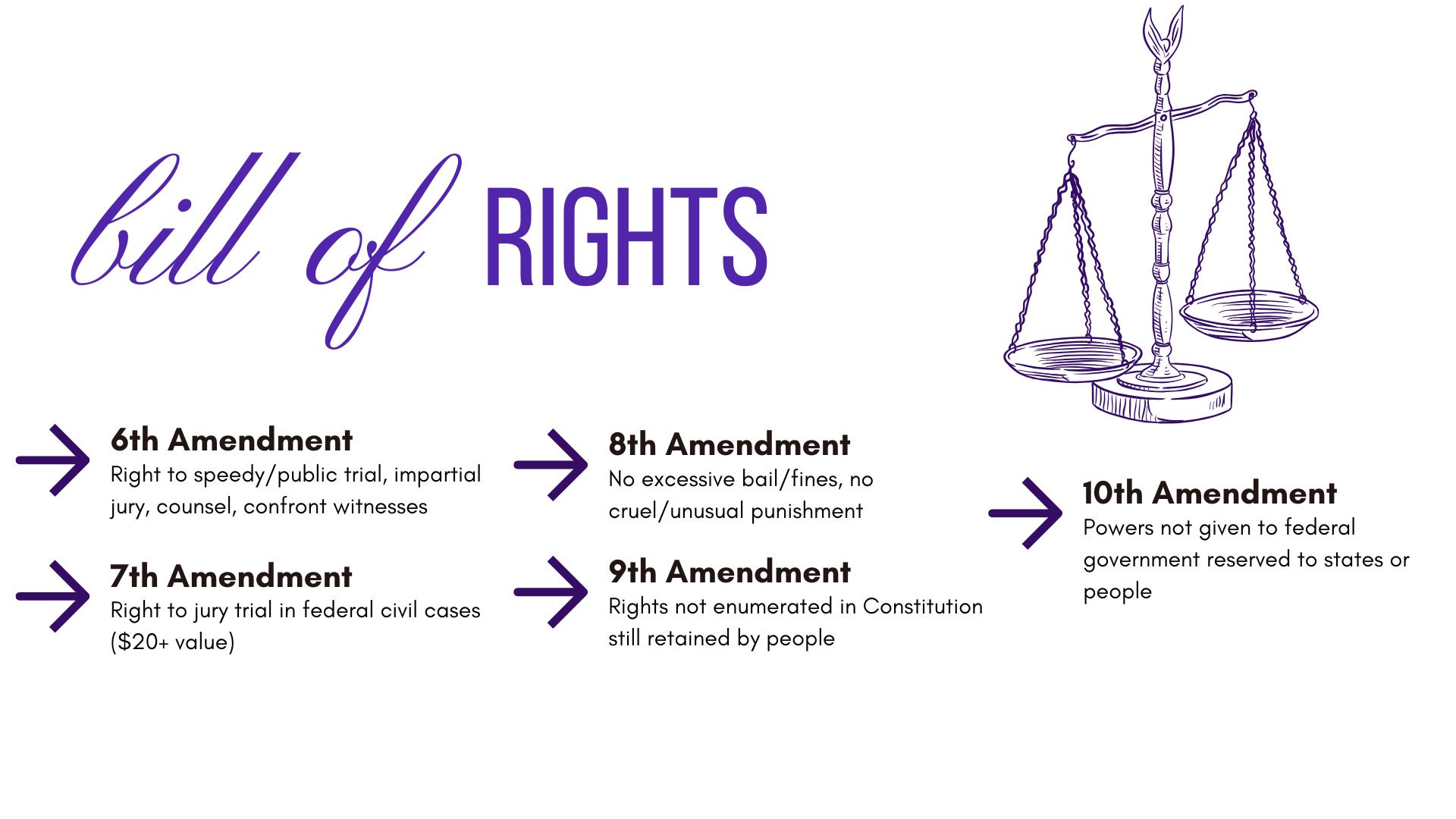
Bill of Rights
If you require free, legal assistance:
Talk to our help desk
Further Reading
-

Youth Right to Protest
-

Educational Justice in Schools
-

Fight Discrimination
-

Build Skills in Lobbying and Lawmaking
-

Facilitate Mutual Aid
-

Climate and Environmental Justice
-

Support Youth Voting Rights
-

Abolition and Community Safety
Disclaimer
Do not use this site to replace a lawyer or share private information.
The tools and services we provide are not intended to create an attorney-client relationship between you or PDP. The information provided in the educational materials and community meetings is not intended to constitute legal advice and should not be substituted for the advice of or in lieu of consultation with an attorney. PDP seeks to keep information up-to-date and accurate but cannot guarantee the completeness or accuracy of the information. PDP disclaims any liability for errors that may be contained in its public education materials and community-facilitated meetings and shall not be responsible for any damages, consequential or actual, arising out of or in connection with the use of this information. PDP makes no warranties, express or implied, as to the quality, content, accuracy, or completeness of the information, text graphics, links, and other items in its public education materials and community-facilitated meetings. Different states also have very different laws from the ones we might discuss in our public education materials and community-facilitated meetings.